Showing posts with label Romy Schneider. Show all posts

Wednesday, 30 May 2012

Questions Of Identity And Nationality

The recent win of the Palme d'Or for Michael Haneke's Amour threw the question up again: is it a French film by an Austrian director or a French film by a German director or an Austrian film shot in French by an Austrian director ... or simply a European film by a ... European (?), Austrian (?), German (?) director?

To be sure, Amour was co-produced by France, Germany, and Austria while Haneke is German born, yet has lived in Austria for most of his life. The question of identity is one that as far as Haneke himself is concerned, only he can answer - is he German, because that's not only where he's been born, but that's also where he shot many of his films, or is he Austrian, because that's where he grew up and that's - perhaps - how he feels? Does it matter with two countries so similar in culture? Does it matter to Haneke? Does it matter at all? Especially in a global age such as ours where for many people, the question of identity is increasingly difficult to answer, not to mention the fact that with regard to Europe, borders disappear and with it, border controls.

But do they?

Michael Haneke 


Sometimes, I get the impression that if anything, the disappearance of these borders seems to have resulted in an increase for a need of a national identity - at least in Europe - so as if to seek shelter and reassurance behind a country's flag in exceedingly precarious and unsettled times. I wonder, if this need for identity, to belong to a particular nation, is a European phenomenon. In other words, is it the same for American (directors, actors, etc.), or are identities in the US easier to define: if you're not born American, moving to America makes you so?

Romy Schneider 

The question is by no means a new one. The most prominent example (in European cinema at least) may well be Romy Schneider. She was born in Vienna, but grew up in Germany, where she's lived for the better part of her life. Yet she's perhaps most identified today as a French actress, France having been her, shall we say, spiritual home, and I daresay, the country she was most happy in (if 'happy' is indeed an apt term to use in connection with Romy Schneider whose much troubled life ended way too soon). Today, Romy Schneider is claimed by all three countries - Austria in particular, although she never actually lived there and only one of her parents was Austrian. Her breakthrough as an actress and her biggest success, commercially, took place in Germany.

That said, Romy detested her German films more and more and wanted nothing more than shedding that 'Sissi' image which, so she said herself, "stuck to her like oatmeal". Moreover, the fact that her mother had a house close to Hitler's in Berchtesgaden which is where Romy grew up, tormented her more the older she got. Especially, after she'd moved to France which, after all, suffered heavily under Nazi occupation, never mind that there were a substantial number of collaborators on the French side, too. On the same token, though she made a number of commercially successful films in France, too, and was voted the most popular French actress in 1980 - the directors of the Nouvelle Vague had as little use for her as did their German counterparts.
Alexandra Maria Lara 

More recent examples regarding the question of identity include, for instance, Alexandra Maria Lara, who's Romanian-born, but immigrated with her parents to Germany at the age of four. I'm fairly certain that if someone were to ask her how she felt, she'd most probably say German, after all, that's where she's lived for most of her life. And yet, the international media usually calls her a German-Romanian or even a Romanian actress.

Again: It's probably her only that knows how she feels about her national identity or indeed if she has any at all. Is it one's language(s), the passport, the place of birth or the place one grows up in that determines one's national identity? And again - what does it really matter? It seems to, somehow, because be that BBC or most other media, there appears to be an eradicable need to put a country before a person's name, 'the French actress so-and-so', 'the Brazilian director ...' and so on.

Marlene Dietrich 

Oddly enough, in the case of Marlene Dietrich it has never been contested that she was German. That's how the German people and the German as well as the international media saw her. However, how did Dietrich see it? How did she define herself? Did she at all? Though I suppose she must have done, for it was upon her own request that her body was buried in Berlin, though one could also rightly argue that the place of burial says equally little about one's national identity (though that would make Romy Scheider French, for she's buried in Boissy-Sans-Avoir, the village she'd bought a house in just a few weeks prior to her death).

And yet, Dietrich became an American citizen in 1939 - and never gave up her American citizenship, not even after her move to France in the mid-1970s - and following her departure for the US in 1930, she only returned to Germany on a couple of occasions: twice before the war, and twice after the war. So surely, one's passport or citizenship say as little about a person's national identity as everything else.

Anyhow, both would make, say, Fatih Akin a great deal more German than Dietrich could ever wish to be for Akin was born in Hamburg - where he's lived all his life - and has a German passport, though Fatih Akin, too, is frequently - and I believe incorrectly - introduced by the (international) media as German-Turkish. Whether he sees himself as German or German-Turkish I don't know. To me, he's German.
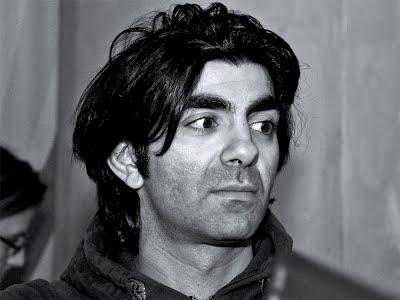
Fatih Akin 

The question of one's national identity, brought to the fore with the emergence of the nation state, seems to become increasingly difficult to define in the globalised world of the 21st century. As the world has become smaller, it has made people across the globe more mobile. The UK of today regards itself as an 'immigrant country', so do many in Germany view their own country where close to 25% of the population have an immigrant background (e.g.one or both parents are of foreign descent). Whether this fact makes the issue of national identity redundant is open for discussion. It certainly contributed to rekindle nationalist movements across Europe that strive to emphasise particular values they believe to be indigenous to a certain people by excluding others.

While it cannot be denied that there are things, traits, and customs that may be labelled typically French or typically German or whatever, perhaps with immigrants accounting for a substantial part of a population in  countries across the globe, national identities have become more supple, less rigid, and therefore they need, I believe, to be redefined.

That, of course, still doesn't answer the question whether Michael Haneke (or Romy Schneider) are German or Austrian or even French. But, as I suggested earlier, perhaps in this day and age, it simply no longer matters. Or, if anything, it's a question everyone has to answer for themselves.

Friday, 5 February 2010

Romy Schneider and Les choses de la vie, Claude Sautet, France 1969


Claude Sautet was born in 1924 and died in 2000 in Paris. He was regarded as ‘un cinéaste sociologique’(a sociological filmmaker). In fact, after his death, the then-French president, Jaques Chirac, maintained that “Claude Sautet’s films held out the mirror of our times”.

The film is based on a book by Paul Guimard, with a screenplay written by Jean Loup Dabadie, a French journalist and writer who later worked with François Truffaut on his film Une belle fille comme moi (France 1972). The reason why I consider Les choses de la vie central to Schneider's career is, first of all, because this film was their first of five collaborations and she would eventually turn into Claude Sautet’s muse. More importantly, however, in Les Choses de la vie Romy Schneider plays what later would become her trademark role: that of a modern, emancipated woman. Furthermore, after a string of mediocre films, it was this film, next to La Piscine (France 1969) that revived her career and in fact marked the beginning of what I choose to call “the great Romy Schneider years”. Les Choses de la vie received the prestigious Prix Louis Delluc in 1969. Previous recipients included Marcel Carné’s Quai de brûmes (France 1939) and Agnès Varda’s masterpiece Le bonheur (France 1964). Les Choses de la vie revolves around a dramatically filmed car accident, involving Pierre, played by Michel Piccoli, whose life is passing before his eyes as he is about to die, reflecting on the choices and decisions he made, and, most of all, on the two women in his life, his ex-wife Cathérine, played by Lea Massari and his current lover Hélène, played by Romy Schneider. Schneider and Piccoli both have star-billing in the film and both their names are mentioned above the title.

The first scene after the opening credits is almost exemplary for Schneider's subsequent career as we see her walking around a balcony with just a towel wrapped around her body, suggesting that a minute ago she might have been in the nude. Nudity (or partial nudity) was something that had become central to Schneider’s film-roles ever since she left Germany for France in the late 1950s, primarily in order to get rid of the much hated Sissi-image, which “stuck to her like oatmeal”, as she once said. Showing herself in the nude was her revenge not just on the Sissi Films, but also on the string of Heimat films, a peculiar genre that thrived in Germany in the 1950s, and in which Schneider’s role was instrumental (Wenn der weisse Flieder wieder blüht, Hans Deppe, Germany 1953; Die Deutschmeister, Ernst Marischka, Germany 1955) and which contributed to turn her into one of the biggest stars of post-war Germany. But it was a fame that she rejected to such a degree that when she was offered one million Deutschmark in the early 1960s to star in Sissi, part 4, she declined. Even Luchino Visconti had quite a time persuading her to revive the part once more in his film Ludwig (Italy, France, West Germany1972) and she only accepted after having been reassured by him that his idea of the Austrian empress would be more true to life than the escapist version she played in the Ernst Marischka films of the 1950. “Stars are endowed with national iconicity and as such have cultural value. Clearly a star’s meaning can shift from the national to the international level” (Hayward 2000: 355). Schneider’s role in history underlines this comment for she was a major star in Germany before rising to even greater fame in France, in spite of never losing her German accent.

Drawing a parallel between Schneider and Marlene Dietrich, who made a similar move 30years earlier, it must be added that Dietrich was often of dubious origin in most of her American films whereas Schneider was always introduced as a German. Another difference between the two stars is the fact that unlike Dietrich, Schneider never played a Nazi or Nazi sympathizer, something Dietrich did on various occasions (A Foreign Affair, Billy Wilder, USA 1947; Judgement At Nuremberg, Stanley Kramer USA 1960). But Dietrich, having acquired American citizenship in 1939 and who fought on the side of the Allies during World War II, could afford to do that whereas Schneider could not. Well aware of the atrocities committed by her country during the war, she had something of a guilt-complex which was fuelled by the fact that her mother, Magda Schneider, not only was Hitler's neighbour in Berchtesgaden, but also knew him personally. As a result, Schneider took pains to show her empathy with the Jews by, for instance, giving both her children Jewish christian names, David and Sarah.

“…The social history of nation can be written in terms of its film stars” (Durgnat in Dyer 1986: 6). Tying in with the above quote by Hayward, I think this one aptly expresses the extent to which the relationship between Germany and France had improved just 15 years after WWII for Schneider to rise to such fame in a country that had been a traditional enemy of Germany! That she went on to play various roles in which she portrayed Nazi victims (Le train, Pierre Granier-Deferre, France/ Italy 1973; La passante de Sans-Souci, Jaques Rouffio, France/ West Germany 1982) surely helped, as did the fact that she got married to a Frenchman, Daniel Biasini, in 1975. As a result, her relationship to her home country remained ambiguous throughout her life, for although she never gave up her German passport, the Germans not only resented her for deserting them, but also, I believe, for the fact that she frequently portrayed Nazi victims, which was something her countrymen were uncomfortable with as coming to terms with their history did not start in Germany until well into the 1980s.

A last important point about Schneider is her private life which was riddled by tragedy, starting with her break-up from Alain Delon in 1963 followed by the suicide of her first husband Harry Meyen in 1979, and culminated in the accidental death of her beloved son, David, in 1981, a year before her own death. The traumas Schneider went through were, in my opinion, something that two groups in particular could relate to and identify with: gay men, and women. Taking into consideration that the time when Schneider came into her own in film-roles in which she portrayed modern, emancipated women, was the advent of gay as well as women’s lib, it is, I believe, no coincidence that those two groups in particular made her their role model, for their freeing themselves from the shackles of society was reflected in the parts she played on screen. And any process of liberation involves a great deal of suffering, which was reflected in Schneider's life off screen, as well as on. A quote by Bernard Pascuito ties in with this: “Not that far away and at times so close to the characters she played on screen. Women who stopped loving, women who suffer and who make others suffer, frustrated mistresses and cuckolded wifes” (Pascuito in Agence France Presse 2002).

Romy Schneider was the recipient of two Césars (L’Importance c’est d’aimer, Andrzej Zulawski, France 1975; Une histoire simple, Claude Sautet, France 1979). She was voted actress of the 20th century by the readers of Paris-Match, receiving 42% of all votes (Agence France Presse 2002), and she was depicted on 15 covers of Paris-Match between 1961 and 1982. Two moving references also deserve being mentioned to show the on-going fascination with the Romy Schneider legend: one in Almodovar’s film All About My Mother (Spain/ France 1999) and a second one in François Ozon’s 8 femmes (France 2002). Again, that both directors are gay is, I think, no coincidence. In conclusion I would like to suggest that Romy Schneider’s off-screen persona was such that watching her on screen is like watching two films simultaneously: the one we see before us (Romy Schneider, the actress), and a second one, which is running on another level (Romy Schneider, the star), not unlike a film’s soundtrack, and separating the two is literally impossible.


BIBLIOGRAPHY:

Agence France Presse (May 28, 2002), no page numbers; no author name given
Dyer, Richard (1986): Stars.London: BFI
Hayward, Susan (2000): Cinema Studies/ Key Concepts. London: Routledge
Pascuito, Pascal (2002): la double mort de Romy. Paris: Albin Michel


FILMOGRAPHY :

A Foreign Affair, Billy Wilder, USA 1947
All About My Mother, Pedro Almodovar, Spain/ France 1999
Die Deutschmeister, Ernst Marischka, Germany 1955
Judgement At Nuremberg, Stanley Kramer, USA 1960
La passante de Sans-Souci, Jaques Rouffio, France/ West Germany 1982
La piscine, Jaques Deray, France/ Italy 1969
Les choses de la vie, Claude Sautet, France/ Italy/ Switzerland 1969
Le train, Pierre Granier-Deferre, France/ Italy 1973
L’importance c’est d’aimer, Andrzej Zulawski, France/ Italy/ West Germany 1975
Ludwig, Luchino Visconti, France/ Italy/ West Germany 1972
Sissi (part 1), Ernst Marischka, Germany 1955
Sissi (part 2), Ernst Marischka, Germany 1956
Sissi (part 3), Ernst Marischka, Germany 1957
Une histoire simple, Claude Sautet, France/ West Germany 1978
Wenn Der Weisse Flieder wieder blüht, Hans Deppe, Germany 1953
8 femmes, François Ozon, France/ Italy 2002

Sunday, 10 January 2010

L'Enfer d'Henri-Georges Clouzot, Serge Bromberg & Ruxandra Medrea, France 2009


L'Enfer d'Henri-Georges Clouzot is a documentary on the making of Clouzot's 1964 film, L'enfer, which was abondoned, primarily, due the director's heart attack. Clouzot's widow granted Bromberg and Medrea access to the surviving footage of the film which they made ample use of. Additionally, they drew on interviews with the cinematographer and other staff working with Clouzot on L'enfer.

Bromberg's and Medrea's film is highly revealing inasmuch as they make clear what a revolutionary work L'enfer would have become, had it been completed. Telling the story of a jealous husband, Clouzot's intention was to visualise the husband's paranoia, his obsession and increasingly wild imaginations, through experimental use of colour, lighting and editing, evoking German Expressionist cinema of the 1920s. Although Claude Chabrol remade L'enfer a good 30 years later, he refrained from employing any of Clouzot's techniques and instead shot it as a straight psychological drama starring Francois Cluzet and Emanuelle Beart.

But this documentary is also about Clouzot's dark side, showing that behind the genius there was an obsessive personality which certainly contributed to the film falling behind schedule and going way over budget, which in addition to Clouzot's eventual heart attack, contributed to the shoot being abandoned. Unfortunately, L'Enfer d'Henri-Georges Clouzot does not include comments by Clouzot's widow, Inez, nor by any major cast member, many of whom have passed, like Clouzot himself or Serge Reggiani, as well as of course, the wonderful Romy Schneider, who would have played the female lead, the object of Reggiani's obsession and jealousy. Although Schneider had already made a few films in France prior to L'enfer, working with Clouzot - who, unlike the Nouvelle Vague directors, was considered mainstream, yet his films were generally very well received - would have meant a major career leap. As it happened, following the abondoned L'enfer, Schneider's career went into slump, to be revived fours years and one marriage later, and once again, the place was France.

Thursday, 26 November 2009

Romy Schneider Season at the Goethe Institute London

A young and radiant Romy Scheider in Henri-Georges Clouzot's L'enfer (France 1964):


I don't seem to be able to get away from my favourite subject (or one of them, anyway): Romy Schneider. Having written about her film, Max et les ferailleurs (France 1971) yesterday - see post below - today I would like to draw your attention to the Romy Schneider Season that opened at the Goethe Institute London a few days ago:

For the full programme, go to:

http://www.goethe.de/ins/gb/lon/kue/en5044784v.htm

One of the films shown is the part documentary, partly restored, L'enfer, by Henri-Georges Clouzot (France 1964), a project that was aborted at the time and which has been turned into a documentary and was received with critical acclaim at this year's Cannes Film Festival.

It is anyone's guess, of course, how it would have changed Schneider's career had Clouzot's film been completed. Prior to Clouzot, Schneider worked with Orson Welles, Otto Preminger, Lucchino Visconti - all first rate names in international cinema. After l'enfer, however, Schneider's career went into a temporary decline that lasted for several years, until it took off again with a vengeance in 1969, when Alain Delon had the bold idea to offer the part of Marianne in La piscine (Jacques Deray, France/ Italy 1969) to Schneider, his ex-lover.

Wednesday, 25 November 2009

Max et les ferailleurs, Claude Sautet, France 1971


Yes, I admit, I love Romy Schneider even in the worst of films. However, this isn't one of them, as I decided last night upon watching the film again for the first time in, I think, thirty years. Shot in 1971, it was one of Romy Schneider's first films during her second French period, which was rung in by her first collaboration with Claude Sautet, Les choses de la vie (France/ Italy/ Switzerland 1970).

Max et les ferailleurs is a detective story - or more adequately put, it is a character study in the guise of a detective story. Set in Nanterre on the outskirts of Paris, Michel Piccoli - playing the detective - uses Romy Schneider - who plays a prostitute, as so many actresses with an accent do and did (see Marlene Dietrich) - but by doing so falls in love with her without realising it. Or to be more precise, without being willing to admit it to himself. The relationship between Schneider's Lily and Piccoli's Pierre calls to mind Alan J. Pakula's film Klute (USA 1971), in which not only the roles of Jane Fonda and Donald Sutherland resemble those of Sautet's film, but also their - dysfunctional - relationship with each other. Curiously enough, Klute was shot the same year as Max et les ferailleurs, which means scrap dealer, alluding to both the profession of Lily's boyfriend as well as the human scrap - or remains - that Max is dealing with, including his own.


Schneider and Piccoli in Max et les ferailleurs


Piccoli plays the cold, cynical loner-cum-detective (or should it be: detective-cum-loner?) who hides behind a facade of professionalism, never giving anything away about his inner world or feelings. If it wasn't for the expression in his eyes, which speaks volumes about his vulnerability, his frustrations and his past disappointments, he'd be on a par with Raymond Chandler's Philip Marlowe. He uses Lily, and by gaining her confidence, he lures her boyfriend into a trap, thus turning him into a person far worse than he actually is, simply because Piccoli's opinion of people is so negative, that without realising it, his pessimistic world view becomes a self-fulfilling prophecy, resulting in the inevitable, tragic ending.


Max et les ferailleurs is available on DVD.

Sunday, 15 November 2009

Grace Kelly: November 12, 1929 - September 14, 1982


There has, I believe, never been an actress with a shorter list of screen credits yet whose fame far exceeds that of most other film stars whose film career may have lasted decades while Kelly's own lasted a mere five years.

And a star is what she was first and foremost: Grace Kelly, born into wealthy Philadelphia family of Irish stock, Grace embarked on her acting career at the age of 18, before breaking into television. This led to her feature film debut as Louise Ann Fuller in Henry Hathaway's Fourteen Hours. Kelly made 11 films between her debut in 1951 and her marriage to Prince Rainier of Monaco in April 1956. Of those 11 films, only three have become classics, while four, perhaps five - if you want to include John Ford's Mogambo or her Oscar-win The Country Girl - can be considered memorable. The former three are, of course, Kelly's two collaborations with Alfred Hitchcock and her role as Gary Cooper's pacifist Quaker girl friend in Fred Zinneman's High Noon. Her parts in Dial M For Murder and, to a greater extent, in To Catch A Thief, are the ones Kelly is most associated with today. In both films she played classy, well-to-do, women with excellent breeding and an impeccable taste in clothes, roles that foreshadowed her subsequent role in real life as the wife of Prince Rainier of Monaco.


Anthony Dawson and Grace Kelly in Dial M For Murder (Alfred Hitchcock, USA 1954)

In connection with Romy Schneider I mentioned elsewhere on this blog that when drawing up a list of her own films, Schneider realised that there wasn't a single classic among them, the fact notwithstanding that she made more than five times as many films as Kelly did. Consequently, that a conservative assessment of Kelly's films yields as many as three classics, makes Kelly's a very impressive career indeed.
Romy Schneider and Grace Kelly both died in 1982. Nine years Schneider's senior, on November 12 this year Grace Kelly would have been 80 years old.


"Leg or breast?" Cary Grant and Grace Kelly in To Catch A Thief (Alfred Hitchcock, USA 1955)

Friday, 13 November 2009

Romy, Torsten C. Fischer, Germany 2009, (ARD - German television)

A few days ago, on November 11, Torsten Fischer's long-awaited and much discussed biopic about the German-Austrian actress Romy Schneider was screened on the German national television channel, ARD. Predictably, the reviews were mixed. Romy Schneider's biographer, Michael Juergs, called it 'a great film, a film that does the ARD proud', while the influential daily Frankfurter Allgemeine ran a 'pro and con section' in which one critic, Johanna Adorjan, claims that 'the film is like a ticking off of Wikipedia entries' while Dieter Bartetzko defends Fischer's film by particularly highlighting Jessica Schwartz's performance and by specifying that 'Romy may not be a great film, but a precise one'.

Well, that's pretty much what could be expected considering the genre - biopic - and, moreover, the subject, Romy Schneider, an actress born in Austria but who had a German passport and who, misunderstood - or some would argue: rejected - by both countries during her lifetime, is now reclaimed by both: the Austrian Film Awards are named after her, Berlin is currently discussing to have a street named after her, and so on. Romy Schneider grew up in Berchtesgaden, but went to boarding school near Salzburg. Later, she lived in Cologne, Berlin, Hamburg, and, of course, Paris, the latter surely being the most important station in her life and career ... But then again, some might argue that Sissi had more impact on her life and career than did her French films. There's no denying: Sissi is what made her, and without it there might not even have been a career in France. Nevertheless, Romy came to loathe her Sissi image. What's more, French directors such as Claude Sautet, Claude Chabrol, or Robert Enrico offered her roles so daring and challenging that she couldn't get in Germany as she was deemed a remnant of 'Grandpa's Cinema', which the then dominant New German Cinema took pains to distance itself from. In fact, Romy Schneider was one of many victims falling prey to their rigorous principles, which included looking down their noses on established stars of the German screen which included talent such as Nadja Tiller, Maria Schell - or Romy Schneider. The careers of Tiller and many others was thenceforth relegated to television, while Romy re-emerged as a star of international calibre. Romy: the only film star known beyond the borders of Germany (and Austria) since Marlene Dietrich. Seen in hindsight, it is a terrible, terrible, shame that none of the New German Cinema directors had any use for her.

As a film genre, there may be no other that has so many detractors and supporters, one that stirs up so much controversy, as the biopic. Any attempt to reconstruct the life and the persona of a person - alive or dead - is bound to upset those who disagree with the portrayal while, of course, it pleases those who are in favour of it. Hence, I can't think of any biopic off the cuff that was free of this controversy and which was universally critically acclaimed. In my opinion, biopics are not that different from literary adaptations, for what is the point of adapting a novel - or indeed: a life - for the screen, unless the screenwriter and the director have an angle, or manage to bring out something in the book, or someone's biography, that has been either overlooked or ignored.

Generally speaking, in my own experience, if my interest in a particular person reaches the point where I want to learn more about him or her, I tend to rely on books rather than film, choosing, if available, two biographies that take a critical approach towards the person in question rather than simply chronologically retelling their life. The trouble is, having read many biographies about Romy Schneider, there's not a single one that does her justice or which I consider even remotely good.

Below is a trailer (in German) to Torsten Fischer's Romy, followed by interviews with celebrities who attended the film's première at Berlin's Delphi Palace on October 28 (see previous blog entry about this event in the October Archives!).

Wednesday, 4 November 2009

Romy Schneider Exhibition, Kinemathek Berlin, 5 December 2009 - 30 May 2010

The long awaited, much anticipated Romy Schneider exhibition will finally open its doors on December 5 this year. The exhibition has been a long time in the making and will include film posters, photos, film clips, costumes, and private correspondence of the famous German-Austrian actress. Most of the exhibits come from private collections, including the late Claude Sautet (1924 - 2000), with whom Schneider collaborated on several films. Initially, the exhibition was supposed to open last year, to commemorate Schneider's 70th birthday, however, due to endless copyright issues, not to mention the difficulties of locating exhibits, artefacts, etc. as there is no such thing as a Romy Schneider Archive, it had to be postponed.

The exhibition will be accompanied by a retrospective of Schneider's films.


Romy Schneider (1938 - 1982).
An image of the exhibition poster will follow as soon as it is available.

Wednesday, 28 October 2009

Premiere of Romy, Thorsten C. Fischer, Germany 2009

Although it is 'only' a made-for television film, the much hyped and talked about biopic on the legendary German-Austrian actress Romy Schneider had its premiere last night at the Delphi Palace in Berlin.

German actress Jessica Schwartz attending the premiere of Romy last night at Berlin's Delphi Palace

Romy will be aired on German television on 11 November. A second biopic on the actress - a German/ French coproduction - this one intended for cinematic release and was to star Yvonne Catterfeld in the title role, fell through due to quarrels between the producers and the Romy Schneider estate. Romy Schneider, who made her first film at the age of 15, later rose to international fame in films by Orson Welles and Luchino Visconti. She eventually settled in Paris, and in 1980 was voted the most popular 'French' actress in a poll by Paris-Match, thus beating heavyweights such as Catherine Deneuve and Jeanne Moreau. Schneider, after Marlene Dietrich and Hildegard Knef, was one of the few German actress who had an international career and were known outside the borders of Germany. Nevertheless, the reason why today Schneider is again primarily remembered in Germany and Austria, may be because there 'is not a single film she made which is considered a classic', as Schneider herself once lamented. When she, at the beginning of the 1980s, compiled a list of all her films, she managed to come up with merely ten which she deemed 'good', but nothing more.


On the left: Romy Schneider in all her melancholy, mysterious, beauty. On the right, Jessica Schwartz.

I, however, beg to differ. I believe that at least her five collaborations with director Claude Sautet have yielded interesting films which, although very much 'time capsules' of the 197s, are nonetheless excellent films which stood the test of time. Films like Cesar et Rosalie (France 1972) or Une histoire simple (France 1978), for which Schneider received the second of two Cesars for Best Actress, is a film along the lines of Scorsese's Alice Doesn't Live Here Anymore (USA 1973), in other words, a product of its time where topics like Women's Lib, abortion and sexual revolution were on everybody's lips. However, in today's cinematic landscape where women are only allowed to concern themselves with marriage and children - and, perhaps, with juggling a 'successful' career on top of it - these portraits of independent women, stand out as almost revolutionary and provocative. Compared to many of today's 'women's films', they seem as fresh as dew on an English lawn on a Spring morning! So, could some clever film distributor please take the Schneider-Sauter collaborations out of their mothballs and re-release them?!

Les choses de la vie, Claude Sautet (France 1969), Scheider's first collaboration with Claude Sautet (1924 - 2000).


'La chanson d'Helene', from the film Les Choses de la vie, sung by Romy Scheider


Cesar et Rosalie (France 1971), the third Schneider-Sautet collaboration, which is a sometimes touching, often funny, film about a menage-a-trois, which in many ways echoes Francois Truffaut's Jules et Jim (France 1961).